
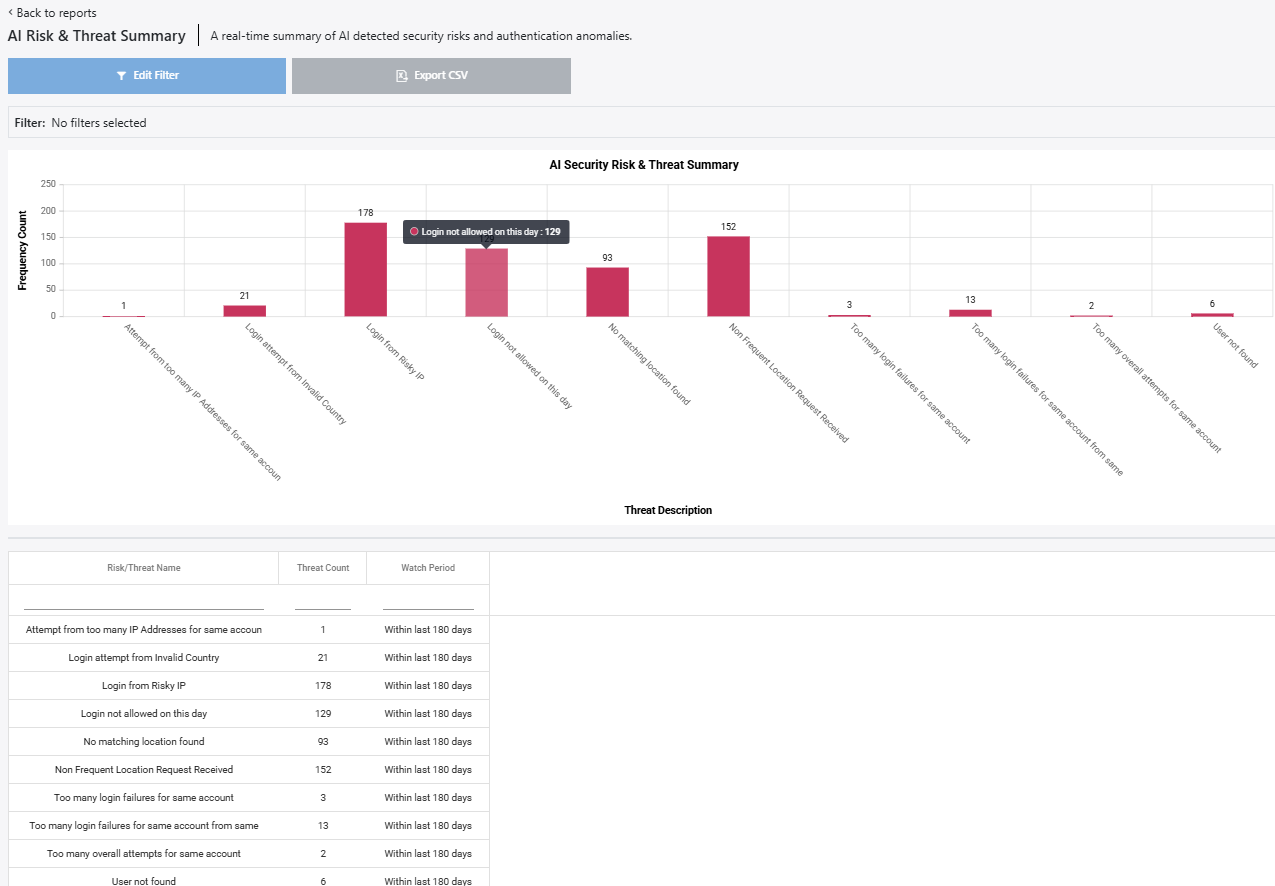
Attempts from many IP addresses against one account
RISK ANALYTICS & MONITORING
Turn scattered login events into a visible risk story.
Rainbow Secure summarizes authentication anomalies and identity risks so security teams can see which patterns are occurring, compare frequency and move from a high-level trend to the underlying activity evidence.
WHY IT MATTERS
A login event is data. A pattern is a decision signal.
Reviewing events one by one makes it difficult to see repetition, concentration and change. Risk analytics groups suspicious authentication outcomes into understandable threat categories for faster prioritization.
7,109+
Activity records may exist
→
Risk categories
Grouped by threat description
→
Investigation
Filter the supporting history
See the authentication conditions that deserve attention.
Logins from risky or invalid-country sources
Access attempted outside an approved day or schedule
No matching or non-frequent location
Repeated failures against the same account
Unknown or unmatched user activity
INVESTIGATION CONTEXT
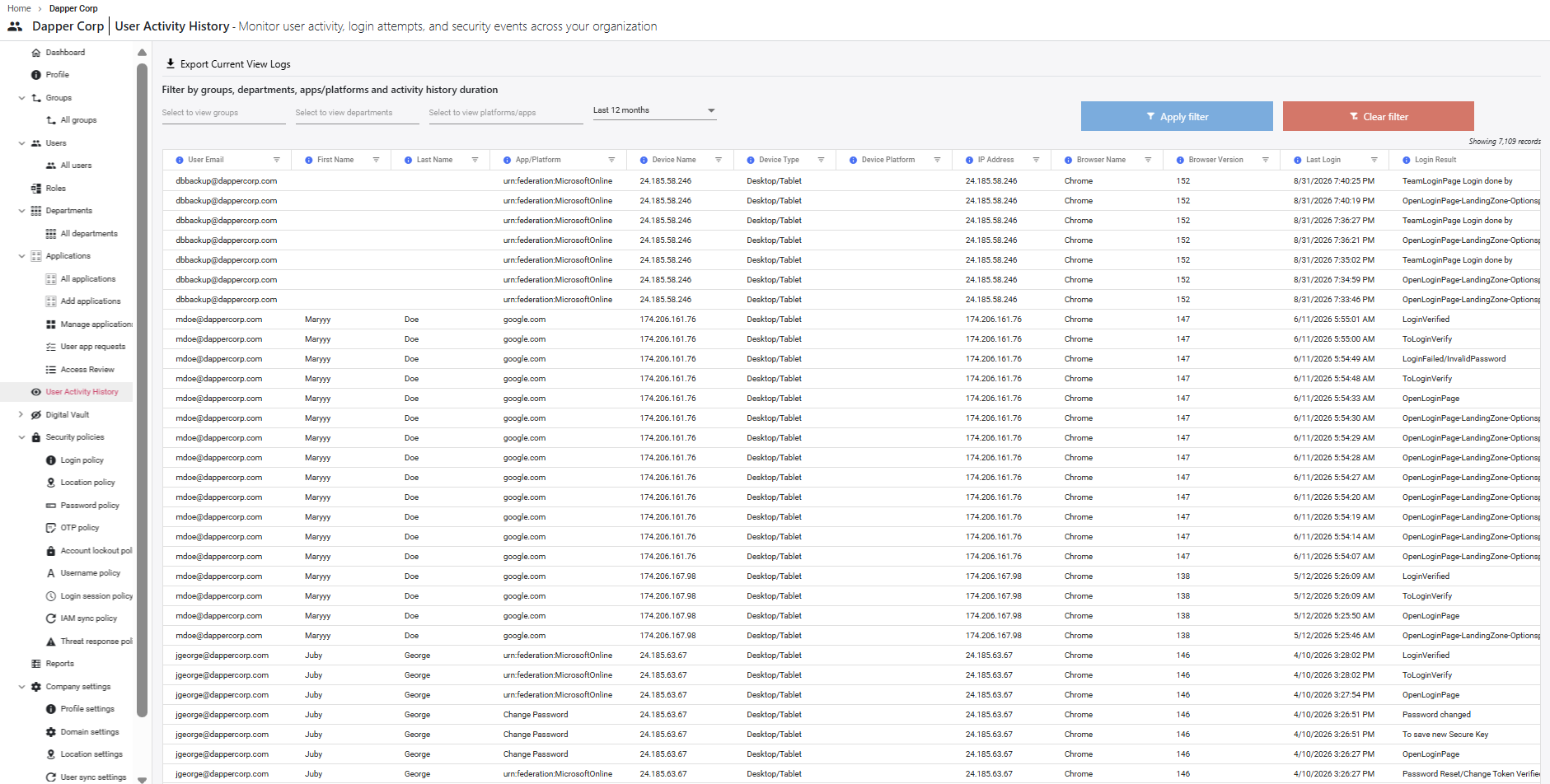
Move from the risk summary to user activity history.
The activity-history view provides the supporting identity, application, device, browser, IP, timestamp and login-result context available for the selected records.
- Filter by group, department and application
- Review device, platform and browser details
- Compare IP addresses and login outcomes
- Export the filtered view for authorized analysis
From pattern to evidence in four steps.
-
01
Review frequency
Identify the risk categories occurring most often.
-
02
Set the scope
Apply the relevant account, group, application and time filters.
-
03
Inspect context
Review identity, IP, device, browser and result fields.
-
04
Respond and document
Apply policy or investigation actions and preserve the relevant evidence.
Know which identity risks are increasing before reviewing every event manually.
Use a guided demonstration to map the threat categories, watch period, filters, reviewers and response workflow for your environment.
Analytics depend on the events and context available to Rainbow Secure, enabled capabilities and configured watch period. Risk indicators support investigation; they do not by themselves prove malicious intent.