Single IP
Restrict or approve one known address.
 Request a demo →
Rainbow Secure lets authorized administrators manage IP access policy using blacklists and whitelists, individual addresses or ranges, and defined restriction periods. The control helps turn a suspicious source into an enforceable access decision.
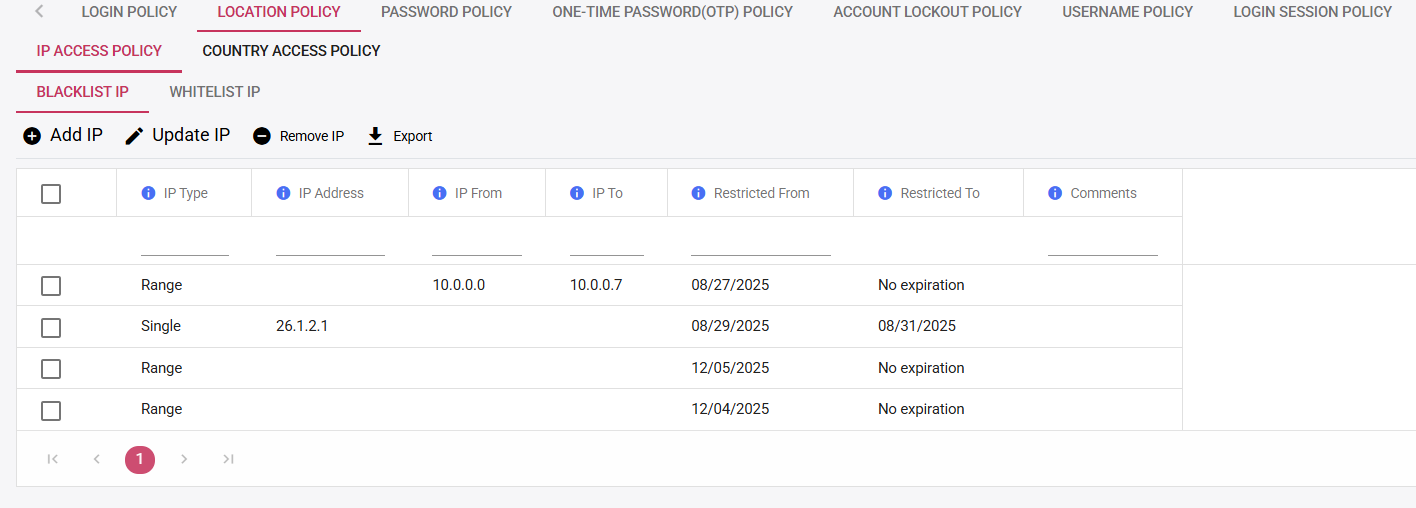
Security teams need a clear way to restrict a confirmed risky address, block a source range or define which IPs are approved for sensitive access—without relying on informal notes or manual memory.
Restrict or approve one known address.
Apply policy across a defined start and end range.
Prevent login access from identified risky sources.
Identify approved sources for a controlled access model.
Use start, end or no-expiration settings according to policy.
Define who may add, update, remove and export IP policies. Record the reason, scope and intended duration so temporary incident actions do not become unexplained permanent rules.
Block an address linked to repeated suspicious authentication attempts.
Limit sensitive logins to approved corporate or operational sources where appropriate.
Restrict an address or range during an active investigation with a defined review period.
Coordinate IP controls with the organization’s broader location and country-access rules.
Bring one administrative, remote-access or incident-response scenario to a guided policy demonstration.
IP intelligence and blocking can reduce exposure but should not be treated as proof of user identity. Shared, dynamic, proxy and cloud addresses require careful validation to avoid disrupting legitimate access.